

This transparency aids in informed decision-making regarding investments and expenses, including significant costs like rent and machinery. The beautiful thing about accounting and the three-statement models it helps inform is that they create a closed assets = liabilities + equity system. What affects the income statement also affects the balance sheet, and any change on the balance sheet must be captured by the cash flow statement.
Monthly Financial Reporting Template for CFOs
Apple’s total liabilities increased, total equity increased, and the combination of the two reconciles to the company’s total assets. Several individuals, including business owners, employees, investors, lenders, and financial auditors, use balance sheets for different purposes. An investor may use your balance sheet to understand how you finance your business and predict future performance to determine whether your company is worth investing in.
Liabilities
These principles ensure consistency and reliability in financial reporting, enabling stakeholders to make informed decisions. Comparative balance sheets for more than one time period are often presented in the same financial statement to indicate trends. Companies may present comparative balance sheets with horizontal analysis to determine the amount and percentage changes in line items and totals, showing trends over time. The main parts are assets (things a company owns), liabilities (debts), and shareholders’ equity (the owners’ share).
What is the difference between current and non-current liabilities?
Shareholders’ equity includes retained earnings or deficit and equity capital used to finance the company. Think of the balance sheet as a snapshot of a business’s financial position at a specific point in time. Just like a scientist captures an image to study a subject, a balance sheet captures a business’s financial state to analyze its health. It provides us with a clear and structured picture of what a business owns (its assets), what it owes (its liabilities), and what’s left over for the owners (its equity). It keeps the balance sheet correct and follows the double-entry accounting system.
- These may include loans, accounts payable, mortgages, deferred revenues, bond issues, warranties, and accrued expenses.
- For a sole proprietorship, shareholders’ equity may be called owner’s equity.
- Equity is what is left over after liabilities are subtracted from assets, and represents the value of the company that belongs to its owners.
- AOCI includes unrealized gains or losses from holding available-for-sale debt securities investments, foreign currency translation gains or losses, and certain pension gains or losses.
Can the accounting equation predict financial outcomes?
On track for 90% automation by 2027, HighRadius is driving Cash Flow Management for Small Businesses toward full finance autonomy. Discover the next generation of strategies and solutions to streamline, simplify, and transform finance operations. Data for these sections can be found in various accounts within the general ledger, such as Cash, Accounts Receivable, Inventory, and Property. Thomas Richard Suozzi (born August 31, 1962) is an accomplished U.S. politician and certified public accountant with extensive experience in public service and financial management. CFI is the global institution behind the financial modeling and valuation analyst FMVA® Designation.

Balance Sheet and the Basic Accounting Equation
- These are the resources that the company has to use in the future like cash, accounts receivable, and fixed assets.
- This equation ensures that the resources of a company (assets) are balanced by the claims against those resources (liabilities and equity).
- Only after debts are settled are shareholders entitled to any of the company’s assets to attempt to recover their investment.
- Did you know 98% of Fortune 500 companies use the balance sheet equation for accurate financial reports?
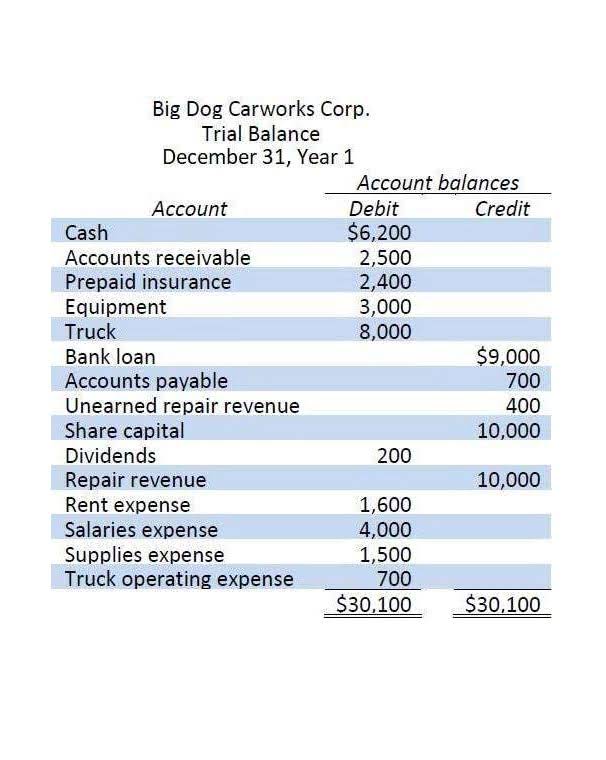
- Before accountants post transactions to the general ledger, total debits must equal total credits on the trial balance.
Additionally, it doesn’t directly measure profitability or efficiency, requiring supplemental financial statements like income statements and cash flow reports for comprehensive insights. The three primary components of the balance sheet are assets, liabilities, and stockholders’ equity. Most companies maintain the accounting equation using a double-entry bookkeeping system to record financial data. Under this system, a change in one account must be matched in another account. These changes are made by debits and credits and for every the balance sheet equation can be represented by: entry, the sum of debits must equal the sum of credits.
Using Equations in Financial Analysis
This transaction affects both sides of the accounting equation; both the left and right sides of the equation increase by +$250. Regardless of how the accounting equation is represented, it is important to remember that the equation must always balance. Common stock represents ownership in a company and gives shareholders the right to vote on certain matters and receive dividends. The first major section of the Balance Sheet details the company’s Assets, which represent probable future economic benefits obtained or controlled by the entity. Assets are systematically categorized based on their expected conversion to cash, differentiating between Current and Non-Current classifications.
It says a company’s assets must equal its liabilities plus shareholders’ equity. This formula is crucial for keeping financial records right and following GAAP rules. To create a balance sheet, you need to gather information about a company’s assets, liabilities, and equity. This information can be obtained from a company’s financial statements, such as its income statement and cash flow statement. Once you have this information, you can organize it into the standard format for a balance sheet. The balance sheet is particularly useful for assessing a company’s liquidity and solvency, as it shows the company’s ability to meet its short-term and long-term obligations.
If you understand these relationships, then you will also know how cash moves through a business. In this example, Apple’s total assets of $364.98 billion are segregated toward the top of the report. This asset section is broken into current assets and non-current assets, and each of these categories is broken into more specific accounts. A brief review of Apple’s assets shows that their cash on hand decreased slightly, yet their non-current assets increased. A company usually must provide a balance sheet to a lender to secure a business loan. A company must also usually provide a balance sheet to private investors when attempting to secure private equity funding.

Cash Flow
In contrast, the income statement shows the company’s financial performance over a period, including revenue, expenses, and profits or losses. All financial transactions can be reflected in the accounting equation, and this balancing act is evident on a company’s balance sheet, where assets must equal the sum of liabilities and equity. Knowing how transactions affect the accounting equation helps in understanding and interpreting financial statements. It shows the company’s assets, liabilities, and equity, and is an important tool for investors to evaluate a company’s financial health. A balance sheet is a financial statement showing assets, liabilities, and shareholders’ equity (stockholders’ equity or owners’ equity) at a certain point in time. A balance sheet date is the end of an accounting period for financial reporting.